
Footfall Counting: What It Is, How It Works & Why Every Retailer Needs It (2026 Guide)
Footfall counting is the process of measuring the number of people entering or passing through a specific location — a store entrance, a mall corridor, a transit station, or an outdoor pedestrian area. Also known as foot traffic counting or visitor counting, it’s one of the most powerful metrics a retail or venue operator can collect.
In this 2026 guide, you’ll learn exactly what footfall counting is, why it matters, which technologies power modern footfall counters, and how to use footfall data to dramatically improve your business performance. You can also explore our People Counting ROI Calculator to quantify the financial impact for your organisation.

What Is Footfall Counting?
Footfall counting (or foot traffic counting) refers to the automated measurement of how many people visit or pass through a defined area over a given time period. The term “footfall” is commonly used in the UK and Europe, while “foot traffic” is more prevalent in North America — but both refer to the same concept.
A footfall counter is the hardware device that performs this measurement — typically mounted above doorways, at turnstiles, or overhead in corridors. The data is then sent to a software platform for reporting and analysis.
Why Footfall Counting Matters for Retailers
Footfall data is arguably the most fundamental KPI in retail. Without knowing how many people visit your store, you cannot meaningfully measure:
- Conversion rate — What percentage of visitors actually make a purchase? A store with 500 footfall and 50 transactions has a 10% conversion rate. Increasing footfall or conversion rate grows revenue.
- Sales per visitor — Total revenue divided by total footfall. Tracking this over time reveals whether your average transaction value is improving.
- Staff-to-customer ratio — Having footfall data enables optimal shift scheduling. You can ensure you always have the right number of staff during peak footfall hours.
- Marketing ROI — Did that promotion increase footfall? Did the new window display drive more traffic? Footfall data answers these questions definitively.
How Does Footfall Counting Work?
Infrared Beam Footfall Counters
The simplest footfall counting method uses a horizontal infrared beam across a doorway. Each time a person breaks the beam, a count increments. While inexpensive (typically $100-$300), this technology struggles with groups walking together and cannot distinguish direction of travel reliably in high-traffic environments.
Video-Based Footfall Counting
Overhead cameras combined with computer vision algorithms can track individual people, distinguish entry from exit, and detect groups and children. Modern AI footfall counting systems using deep learning achieve 97-99% accuracy. Providers like FotfallCam specialize in this technology with cloud-connected analytics. For enterprise-level solutions, ShopperTrak and RetailNext are leading video-based footfall analytics providers.
3D Stereo Vision Footfall Counters
Dual-lens 3D cameras create a depth map of the doorway, precisely distinguishing people from shopping carts, bags, and strollers. This is the industry-standard technology for retail footfall counting in 2026, with leading vendors including V-Count, Xovis, and Brickstream.
LiDAR Footfall Counting
LiDAR footfall counters are naturally GDPR-compliant since they capture geometric data rather than images. They excel in wide-area counting and outdoor pedestrian counting scenarios, used by Terabee and other specialist providers.

Footfall Counting by Industry
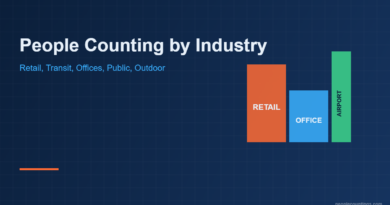
Retail Footfall Counting
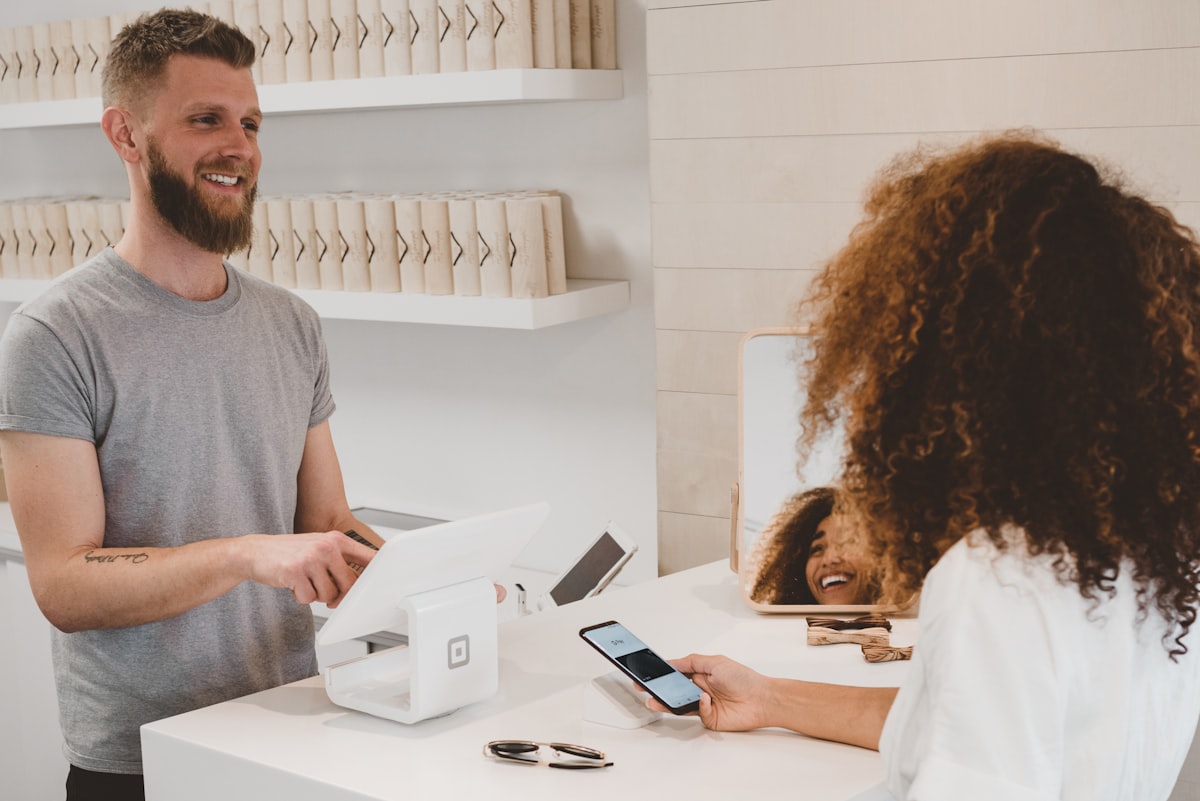
Retail stores of all sizes use footfall counting to measure store performance. Key applications include conversion rate tracking, staff scheduling, promotional effectiveness analysis, and multi-store benchmarking. Major retailers including H&M, Zara, Target, and Costco deploy enterprise footfall analytics platforms.
Shopping Mall Footfall Counting
Shopping mall operators track footfall at entrances, anchor stores, food courts, and corridors. This data informs tenant rental pricing, marketing spend, and capital investment decisions. Zone-level footfall analysis reveals which areas of the mall are underperforming.
Transportation and Transit Footfall Counting
Airport terminals, train stations, and bus depots rely on footfall counting for passenger flow management, security staffing, concession revenue forecasting, and regulatory reporting. Accuracy requirements in transit are among the highest — some operators require 99%+ accuracy.

How Much Does a Footfall Counting System Cost?
- Basic IR footfall counters: $100-$400 per unit, often with no subscription fee.
- 3D video footfall counters: $400-$1,200 per sensor + $30-$80/month analytics fee per location.
- Enterprise systems: Custom pricing. Typically $500-$5,000/month for multi-location analytics.
- LiDAR and thermal systems: $800-$3,000+ per sensor for GDPR-sensitive or high-accuracy deployments.
Frequently Asked Questions: Footfall Counting
What is footfall in retail?
In retail, “footfall” refers to the number of customers or visitors who enter a store or shopping area during a given period. Footfall is a key KPI for all brick-and-mortar retailers. Higher footfall doesn’t automatically mean higher sales — that’s why conversion rate analysis alongside footfall data is essential.
Is footfall data GDPR compliant?
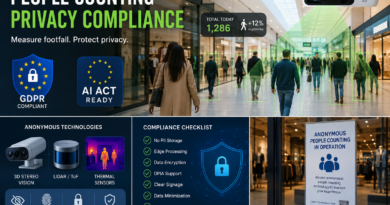
Most modern footfall counting systems are fully GDPR-compliant. Technologies like LiDAR, thermal imaging, and anonymized video processing count people without storing images or biometric data. Always verify with your chosen provider that their system meets GDPR and local privacy law requirements.
What is the difference between footfall and footfall analytics?
Footfall is the raw number of visitors. Footfall analytics goes beyond simple counts to analyze patterns: peak times, day-of-week trends, dwell time in zones, conversion rates, and year-over-year comparisons. Good footfall analytics transforms raw counts into actionable business intelligence.
Ready to Start Counting Footfall?
Whether you’re a small independent retailer looking for your first footfall counter or a multi-location chain needing enterprise-grade footfall analytics, there’s a solution for every budget in 2026. Request a free quote from our vetted network of footfall counter providers and get matched with the best solution for your business. Not sure which technology fits your store? Compare options in our People Counting Solutions Compared guide.