
People Counting for Shopping Malls: Use Cases, KPIs, and How to Integrate Footfall Data with Your Existing Systems
Shopping malls run on footfall. Every marketing campaign, lease negotiation, staffing plan, and HVAC setting ultimately traces back to a single question: how many people were here, when, and what did they do? This guide — a companion to our overview of people counting in malls and our broader footfall counting complete guide — explains how modern people counting platforms help mall operators answer that question — and, more importantly, how footfall data should be combined with the brand-side POS, CRM, HVAC, ERP, and digital signage systems you already use to turn raw counts into revenue.
TL;DR — Key Takeaways
- What it is: A mall people counting platform is a multi-sensor system that measures visitors at entrances, corridors, and zones, then turns those counts into operational and commercial KPIs.
- Why it matters: Footfall is the denominator of almost every retail KPI — conversion, sales per visitor, rent per visit, campaign ROI, and energy per occupant.
- Core use cases: leasing reports, tenant conversion, zone heat maps, queue and dwell, marketing attribution, HVAC and cleaning optimization, safety.
- Integrations that matter: POS/ERP, CRM and loyalty, BI and warehouses, BMS and HVAC, digital signage and DOOH, parking/ALPR, marketing automation.
- Expected accuracy: 95–98% at entrances with modern 3D or AI video sensors.
- Typical rollout: 4–6 weeks for sensors and 2–4 weeks for integrations in a 150-store center.
What is a mall people counting platform?
A mall people counting platform is a software and sensor system that measures how many visitors enter a shopping center, how they move between zones, and how long they stay, then exposes that data through dashboards and APIs. Unlike generic security cameras, it is engineered for accuracy (typically 95–98% at entrances), multi-tenant reporting, and integration with retail and building systems.
Why mall operators need a dedicated people counting platform
A shopping center is not a single shop — it is a network of entrances, corridors, food courts, anchor stores, in-line tenants, parking decks, and event areas. Generic security cameras cannot give you clean occupancy data at this scale, and tenants each have their own counters that rarely agree with the mall’s numbers. A dedicated people counting platform for retail unifies sensors (3D stereo, AI video, ToF, Wi-Fi, LiDAR) across all entrances and zones, de-duplicates staff and re-entries, and delivers a single source of truth for footfall, dwell time, turn-in rate, and zone-level occupancy.

Core use cases for people counting in shopping malls
1. Accurate footfall reporting for leasing and investors
Leasing teams use monthly and year-on-year footfall reports to justify rent levels, anchor negotiations, and capital investments. A certified counting platform with auditable data (typically 95%+ accuracy) becomes the neutral reference that both the landlord and tenants accept.
2. Conversion rate by brand and category
When store-level counters are combined with tenant POS data, the mall can report conversion rate (transactions ÷ visitors), average transaction value, and sales per visitor for every brand. This turns footfall from a vanity metric into a performance KPI that brands actually care about. See our deep dive on the 20 essential retail KPIs you can measure with a people counting system.
3. Zone analytics and heat maps
Zone-level sensors reveal which corridors, courts, and anchor-adjacent areas carry the most traffic. Operators use these heat maps to reprice pop-up locations, redesign circulation, and justify kiosk rents — often the highest-margin revenue in the mall.
4. Queue and dwell time management
Dwell time in food courts, play areas, and cinemas predicts spend. Queue detection at customer service desks, valet, and restrooms triggers staff alerts before complaints appear on social media — a pattern we illustrate in our case study, A Tale of Two Store Managers.
5. Marketing attribution and event ROI
Every campaign — SMS blast, influencer activation, seasonal event, Black Friday — can be measured against the incremental visitor lift it produced, compared to a control period. Marketing budgets stop being a debate and start being a spreadsheet — the same logic underpins a full people counting ROI business case.
6. Operational efficiency: cleaning, security, HVAC
Occupancy data drives dynamic cleaning schedules, guard deployment, and HVAC setpoints. In many centers, HVAC alone represents 30–40% of operating cost — tying it to real-time occupancy delivers measurable energy savings.
7. Safety and life-safety compliance
Real-time occupancy dashboards support evacuation planning and maximum-capacity regulations, similar to how counting is used in transportation hubs and other high-traffic public venues. During incidents, operators know exactly how many people are inside each zone.
The KPI framework: what to measure, and for whom
A mall people counting platform should deliver KPIs tailored to four audiences: mall operations, leasing, marketing, and the brands (tenants).
| Stakeholder | Core KPIs | Decision it drives |
|---|---|---|
| Mall operations | Total footfall, peak occupancy, entrance share, dwell time | Staffing, HVAC, cleaning, security |
| Leasing | Zone traffic, corridor ranking, anchor pull-through | Rent pricing, tenant mix, pop-up placement |
| Marketing | Campaign lift %, visit frequency, new vs. returning | Budget allocation, event ROI |
| Brands / tenants | Store visitors, turn-in rate, conversion, sales per visitor | Staff scheduling, VM, promo planning |
Integrating people counting with the systems your brands already use
Footfall data only becomes strategic when it joins the other systems in the mall ecosystem. Modern platforms expose REST APIs, webhooks, and scheduled exports that integrate cleanly with the tools below.
POS and ERP systems (conversion and sales per visitor)
Integrate with tenant POS (Oracle Retail, LS Retail, Logo, Mikro, SAP Retail, Shopify POS, Lightspeed). Pull transaction counts and basket values; push visitor counts in return. Compute conversion rate and sales per visitor automatically and share a branded dashboard with each tenant. For leasing managers comparing vendor options, our comparison of people counting brands and the 2026 Power List of the top 50 providers are useful starting points.
CRM and loyalty platforms
Connect with Salesforce, HubSpot, Insider, and loyalty apps to distinguish members from anonymous visitors. Model visit frequency, recency, and cross-store journeys to feed segmented campaigns back into the CRM.
BI and data warehouses
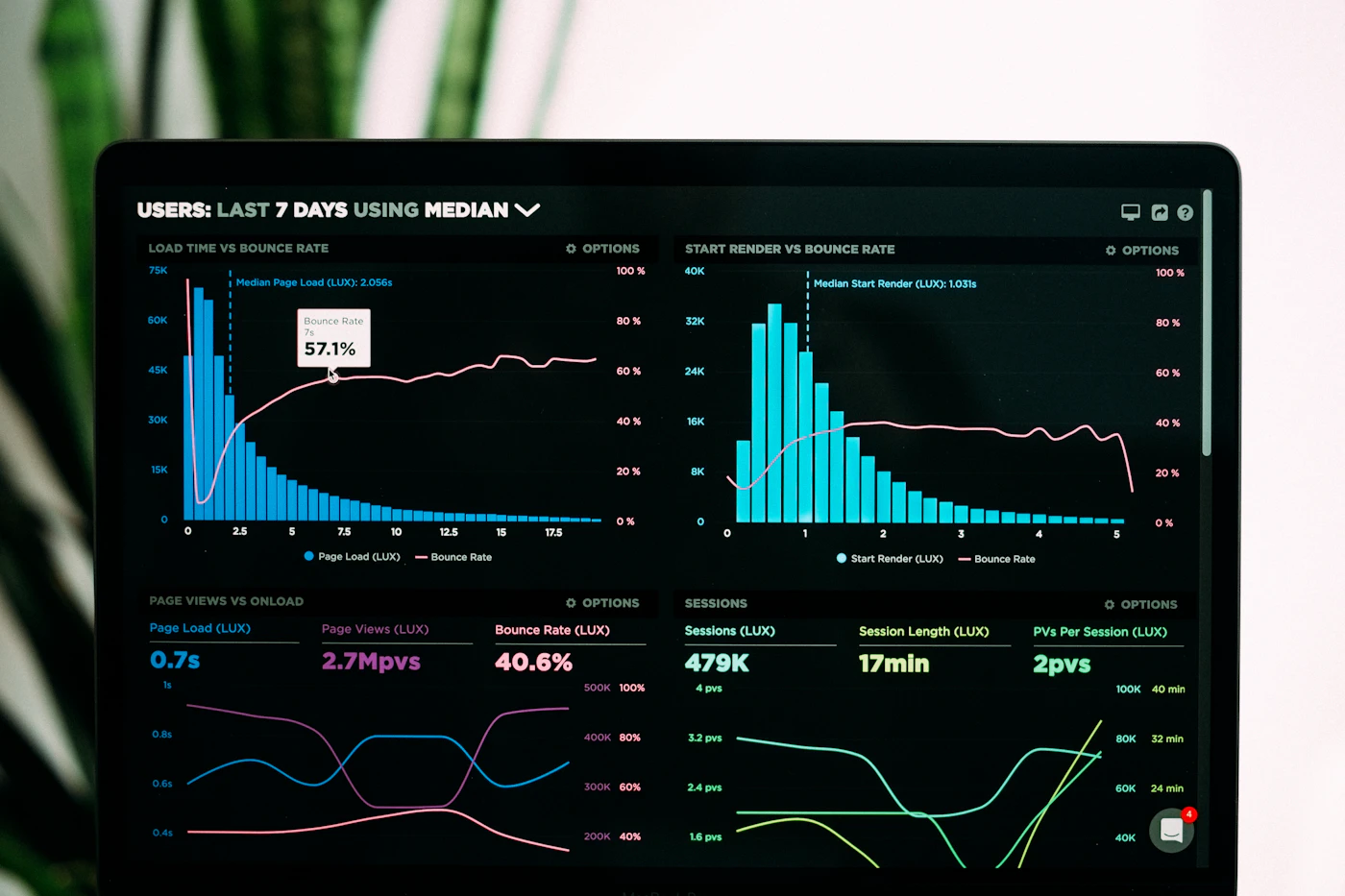
Stream footfall to Power BI, Tableau, Looker, Snowflake, or BigQuery. A daily warehouse feed is the most reliable way to combine footfall with finance, lease revenue, and marketing spend in a single model.
HVAC and building management systems (BMS)
Via BACnet, Modbus, or REST bridges, real-time occupancy can drive chillers, AHUs, and lighting. This is one of the fastest payback integrations — typically 8–18% energy savings in large centers.
Digital signage and DOOH
Trigger content by live zone occupancy: queue-buster promos when a corridor is quiet, premium advertising rates during peak hours, and audience-verified impressions for DOOH media buyers.
Parking and access control
Correlate parking entries (ALPR) with mall entrances to measure capture rate and parking-to-visitor conversion — critical for centers where parking is free but expensive to operate.
Marketing automation and SMS
Webhook an under-performing day into Braze, Klaviyo, or Netmera to trigger a geofenced push to your loyalty base. Close the loop by measuring the resulting footfall lift.
Reference integration architecture
A proven pattern for shopping centers looks like this:
- Edge layer: 3D/AI sensors at every entrance, anchor, and key zone.
- Platform layer: cloud people counting platform with tenant accounts, SLA, and API.
- Integration layer: REST / webhooks / SFTP to POS, BMS, BI, CRM, and signage.
- Insight layer: role-based dashboards for operations, leasing, marketing, and brands.

Implementation checklist
- Map every public entrance, corridor, and zone you want to measure.
- Choose sensor technology per zone (3D stereo for entrances, AI video for zones, ToF for tight spots).
- Define the KPI tree for operations, leasing, marketing, and tenants.
- List integration targets: POS, BMS, BI, CRM, signage, parking.
- Agree a tenant-data-sharing charter (which metrics each brand sees).
- Run a 4-week calibration and audit to certify accuracy.
- Launch role-based dashboards and monthly reporting cadence.
Related reading
If you want to go deeper into specific parts of the stack before rolling out a mall-wide program, the following guides pair well with this article:
- For a side-by-side technology view, see our breakdown of people counting solutions compared by technology, which covers stereo-vision, LiDAR, ToF, Wi-Fi and thermal trade-offs.
- To benchmark vendors, review the top people counting system providers and their retail clients and the expanded directory of leading people counting platform providers.
- For a broader shortlist, our roundup of the top 20 people counting solutions highlights strengths across retail, transit and mixed-use portfolios.
- Malls with anchor cultural tenants or museum zones can cross-reference our guide to choosing people counting sensors for museums.
- Newer teams may prefer starting with the people counting sensors FAQ before evaluating vendors.
- If you operate mobility hubs or transit-connected malls, take a look at Hella people counting solutions for public transport and retail.
Frequently asked questions
The answers below are marked up with FAQPage structured data so that search engines and AI assistants can surface them directly. For the structured-data guidelines, see Google Search Central.
What is people counting in a shopping mall?
People counting in a shopping mall is the automated measurement of visitors entering and moving through a center using sensors such as 3D stereo cameras, AI video, time-of-flight (ToF), Wi-Fi probes, or LiDAR. The counts feed dashboards and APIs that report footfall, dwell time, turn-in rate, and zone occupancy.
Does people counting respect visitor privacy?
Yes. Modern sensors count silhouettes and anonymous IDs, not faces. A GDPR and KVKK compliant platform stores aggregated counts only, with no personal data.
How accurate are mall people counters?
Professional 3D and AI sensors deliver 95–98% accuracy at mall entrances when correctly calibrated (see our technical review of stereo vision). Basic IR beams or Wi-Fi-only counting typically deliver lower accuracy and are not recommended for commercial reporting.
Can each brand in the mall get its own dashboard?
Yes. A multi-tenant platform gives every brand a secure login with the KPIs agreed in the leasing contract — typically store visitors, turn-in rate, and conversion (when they share POS).
How long does a mall-wide rollout take?
For a 150-store center, typical timelines are 4–6 weeks for sensor installation and 2–4 weeks for system integration and dashboard launch.
Which systems should a mall integrate people counting with?
The highest-value integrations (answered in more detail in our 30 burning questions about people counting) are POS and ERP (conversion and sales per visitor), BMS and HVAC (energy optimization), BI and data warehouses (executive reporting), CRM and loyalty (visit frequency and segmentation), digital signage and DOOH (audience-verified advertising), parking and ALPR (capture rate), and marketing automation (closed-loop campaign attribution).
Conclusion
People counting is no longer a standalone metric — it is the connective tissue between the mall’s operational, leasing, marketing, and tenant performance data. The centers that treat footfall as a first-class data source, and integrate it cleanly with POS, BMS, CRM, BI, and signage, convert visitor traffic into measurable revenue and operational efficiency. The technology is mature; the differentiator is how well the data is modeled, governed, and shared across stakeholders. For a longer view on where the sector is heading, see our perspective on the future of people counting and footfall analytics.